Why travel like a local is troublesome advice for new solo travellers
Why ‘travel like a local’ is troublesome advice for new solo travellers
Do you know that one phrase that has become the ultimate mantra for most modern wanderers? It is “travel like a local”. You can see it plastered across various social media platforms, being shouted by travel influencers and even used as a hook by travel agencies. Though the phrase promises authenticity and the opportunity to experience local cultures, it can very quickly turn into trouble. In this article, experts working with vjstravel.com take you on a journey to explain why “travel like a local” can be troublesome, especially for new solo travellers.
What is the phrase all about?
There is nothing wrong with the intention behind the phrase. It aims to encourage cultural immersion. However, the reality is that for a solo beginner, this exact motto can turn out to be a recipe for isolation, exhaustion and safety risk. Here is why people who are travelling solo for the first time or are new to this genre of travelling should embrace being a tourist and leave the “local” lifestyle for later, when they are more experienced.
The ‘authenticity’ trap and loneliness
When you are a new solo traveller, you need to take care of certain things. Otherwise, you will find yourself sitting quietly in a residential neighbourhood. Trying to enjoy like a local, but ultimately being lonely with no one to talk to.
What you need to understand is that the locals are not on vacation; they are going to work, picking up their kids, running their errands. They are not necessarily looking to make friends, especially with a foreign stranger. Hence, it is quite easy to fall into the trap of isolation and end up ruining your entire travel plan.
This is where tourist accommodations like hostels become your biggest advantage. These places are designed for social interactions. As a new traveller, it is always preferable to stay in a hostel rather than in an Airbnb in a residential or isolated area. According to a popular psychology news outlet, it is often found that social isolation during travel can lead to traveller's depression. It is a phenomenon that can be triggered by a lack of familiar social structures.
Burden of logistics
When you travel like a tourist, there are certain things that become easy. However, those things become a problem when you try to travel like a local without having local knowledge, as in that case, you also inherit the local problems.
The main problem you may face when trying to access the local transportation system without knowing about it is that it can cause unnecessary stress, which can lead to “fatigue”.
When you follow a route specifically designed for tourists, or what is otherwise known as a tourist zone, you will find that it is built for convenience. For a novice, solo traveller, convenience is one thing that prevents total burnout.
The safety gap
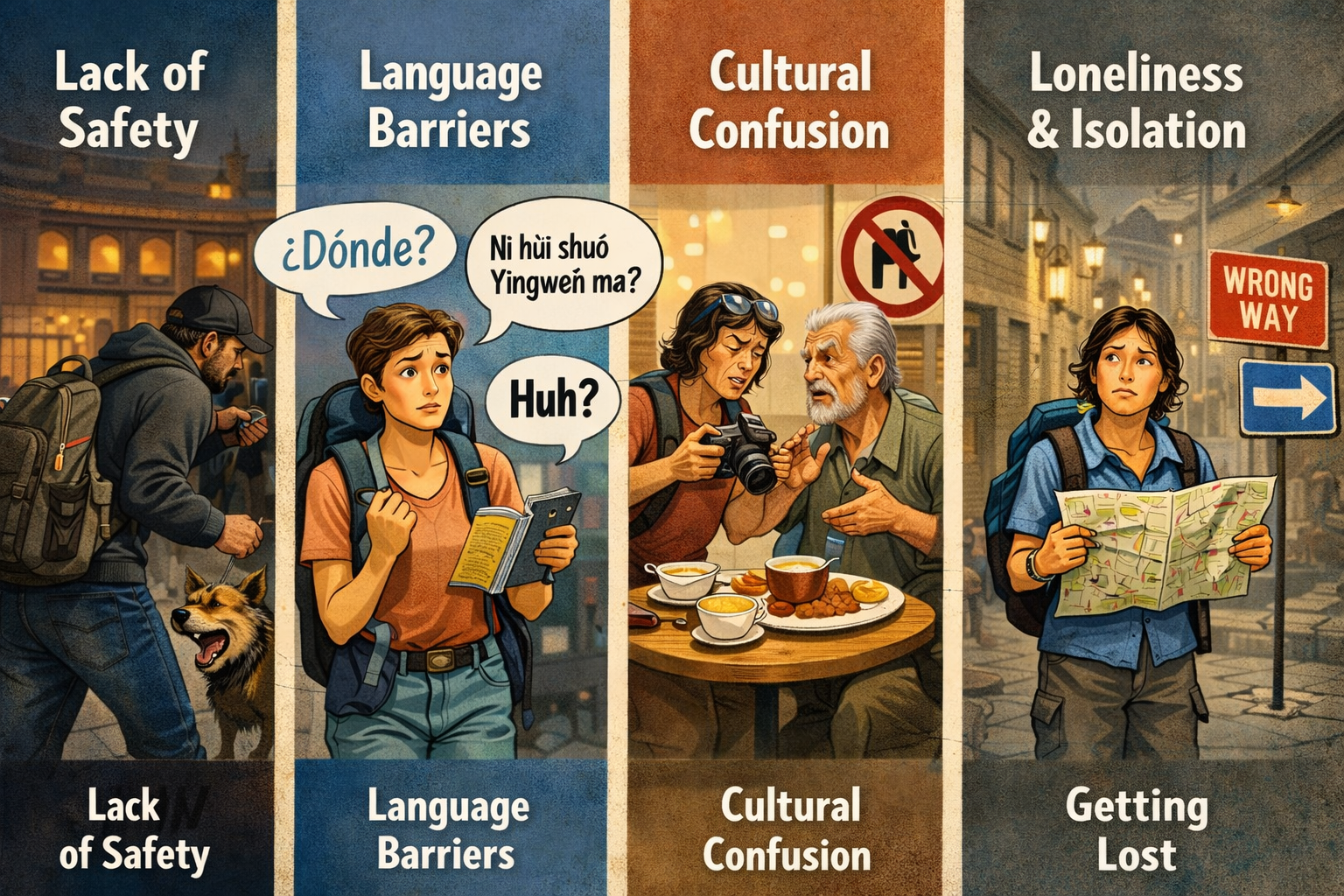
Can you guess what the number one concern for solo travellers, particularly first-timers and women, is? It is safety. There are many tourist areas which are prone to petty scams. Travelling like a local without having much experience can make you vulnerable to those scams. It is also suggested to explore mainly those areas that are well-lit, highly populated, and well visible.
Often, reels or social media posts present a glamorous, beautiful picture of travellers blending into local neighbourhoods. However, if you are not experienced in doing so, then it can make you stand out even more. That, in turn, can make you a target and also put you at risk of violating the local unwritten rules of the area.
When you are in a tourist area or hub, it is very easy to find help in an emergency. However, that becomes extremely tough if you are exploring the outskirts of a region all by yourself, especially in a place where no one speaks your language.
The language barrier is real:
If you talk about language barriers while visiting another country on social media, then the internet will make you believe there is an app for everything that can translate your language into the native language of the place you are visiting. Though partially true, the reality can be entirely different. Imagine you are in a place with low connectivity, or the app you are using is not available in the country you are visiting. What most travel influencers fail to mention is that the language barrier is real. It is true that you can learn a few phrases before visiting the place. However, that can turn out to be fruitless or ineffective in case of an emergency.
Even if there isn’t an emergency, it can cause you trouble. If you visit a restaurant that caters to tourists, you will find menus in a common language like English or with pictures that help the traveller understand what they’re eating. In a local spot, such options may be unavailable, leading you to eat something you are allergic to or can't eat.
If you get lost in an area without a data connection, then the language barrier can lead to panic. Unless you are confident and experienced enough to handle that situation, ]vjstravel.com experts suggest that it is better to travel like a tourist rather than a local.
Cultural missteps and respect
"Travelling like a local" often implies an intimacy that hasn't been earned. Locals in many parts of the world view their neighbourhoods as private sanctuaries from the tourism industry. Bringing a camera and a backpack into a quiet, sacred, or private residential space can be seen as disrespectful.
Tourist zones are designated "shared spaces." Residential zones are not. A new traveller may not yet have the cultural nuance to navigate these boundaries respectfully.
How to build the “travel muscle”?
Like every other thing in life, so no travel is a skill that you need to develop. For instance, you won’t try to climb Mount Everest before hiking a local trail. Think of solo travel as a high-stakes skill, much like mountaineering. You wouldn't attempt to summit Mount Everest before you’ve successfully hiked a well-marked local trail.
Applying the "travel like a local" mindset to a remote or culturally complex destination is the logistical equivalent of a 29,000-foot climb. If you haven't mastered the "tourist" basics, you're setting yourself up for burnout or worse.
Before going "off the grid," you need to build your Travel IQ in places designed to help you succeed. For instance, popular places like Bangkok, London, or Tokyo. Only after you’ve mastered the logistics of solo life should you attempt a high-difficulty "local" experience, such as rural Mongolia or the Amazon Basin.
Happy travelling!
Leave a Reply
Your email address will not be published.
Subscribe to receive flight deals, special offers, and travel updates directly in your inbox.