How to navigate airport lockdowns and flight cancellations during regional conflicts
How to navigate airport lockdowns and flight cancellations during regional conflicts
It is absolutely terrifying to be stranded at an international airport during regional conflicts. With escalating tensions around the world, like the recent conflicts between Israel and Iran, which resulted in the closure of various airspaces, especially across the Gulf countries, many may find themselves trapped in different air hubs.
These events are not only about having disrupted flight operations but also restricted access to basic necessities. Communication and safe evacuation options.
In this article, experts at vjstravel.com share their opinion on what to do and what not to do when you are stuck at a foreign airport amid escalating regional conflicts.
What is a regional conflict?
Before knowing how to handle a sudden crisis, it is important to understand what regional conflicts are. It is about sudden military actions which lead to closed borders, grounded flights and heightened security.
For instance, multiple airspaces in the Gulf countries faced closures after Iran’s attack on US bases in Qatar, Kuwait, the UAE, and Bahrain in retaliation for joint military attacks by the US and Israel on Tehran.
This article will explore and provide practical, step-by-step guidance based on expert advice from vjstravel.com.
What immediate safety measures should you take?
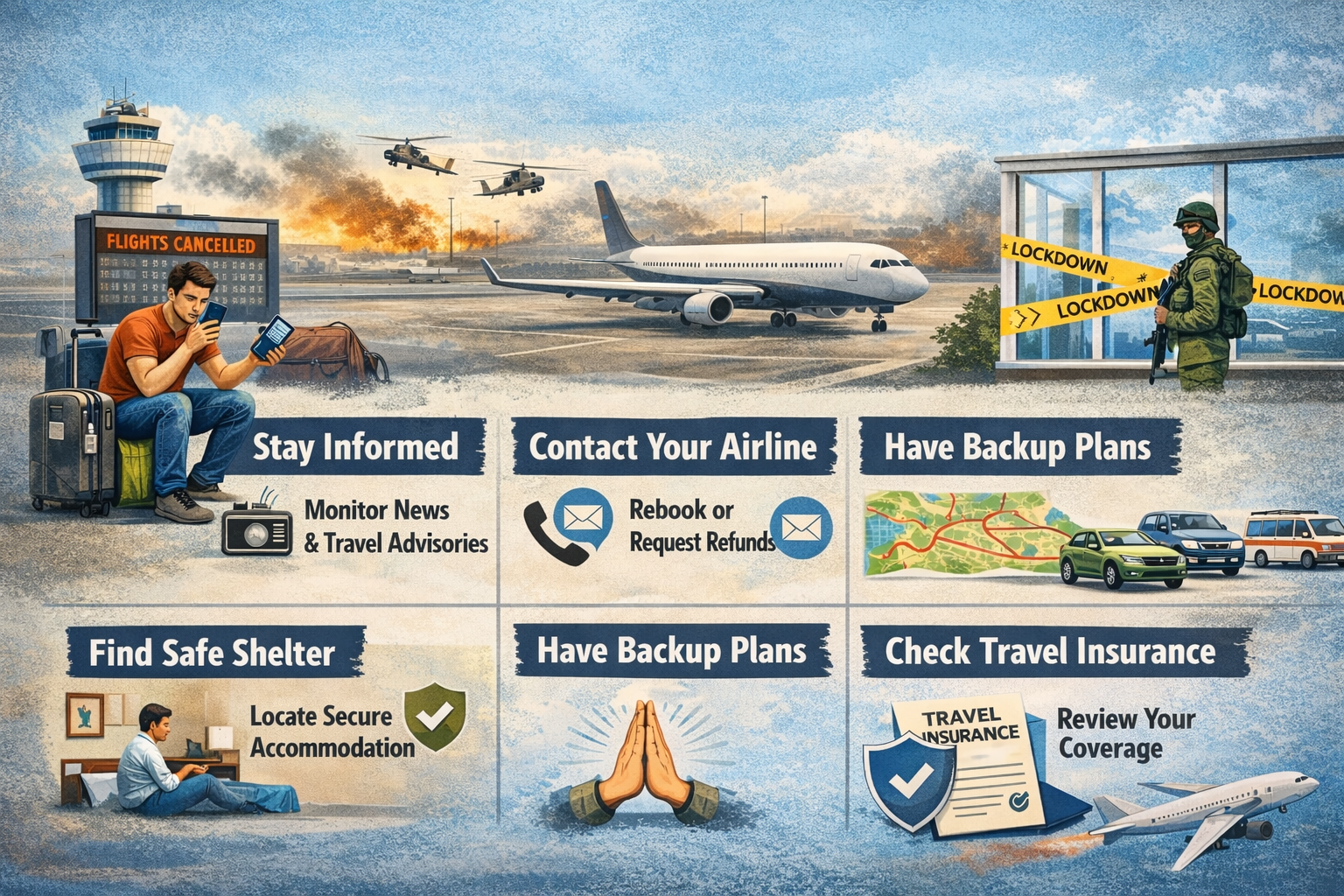
What is your priority when a conflict erupts? It is your personal safety and the safety of your loved ones or companions. During conflicts, airports can become tense environments, with overcrowding and limited resources. Here are some steps that you can take:
- The first step you need to take is to ensure that you follow the shelter-in-place advice given by the airlines and the government authorities
- Keep checking airport announcements and also the directives from security personnel
- In 2026 almost everyone has access to the internet or other smart devices. Tune in to announcements from credible sources to ensure that you don’t miss out on any recent updates. However, it is also important to keep calm
- Steer clear of large gatherings, as they can turn volatile very quickly
- Make a go-bag which will include all your essential documents and items. Make sure to keep passports, medications, chargers, money, cards, and snacks in the bag. It is to make sure that even if a situation arises where you have to leave your large luggage behind, you can travel with all the essentials
- Make sure that you get in touch with your embassy as quickly as possible
- Take time and familiarise yourself with the safe zones inside the airport. During long stranding, some airports offer free Wi-Fi or charging stations. Make sure to use them wisely
It is important to remember that, in a crisis, you must remain vigilant. Geopolitical events can lead to secondary threats, such as cyberattacks or power outages, so keep devices charged and maintain offline backups of documents. If you are travelling solo, try pairing up with someone else.
Communication is the key:
During a conflict, the internet and phones can be disrupted. While stuck, until that happens, make sure that you take certain precautions and steps.
- Get in touch with your airline using helpline numbers or apps for rebooking. Check for waivers for changes
- Reach out to the helpline numbers of embassies. The agencies can help their citizens during crises, including evacuations. Share your location with your embassy and seek help. As per the experts at vjstravel.com, you should always keep the number of embassies handy while travelling abroad
- Use social media but wisely. Do not post any sensitive information that can impact your safety. On the other hand, you can use social media to monitor updates by the authorities, including your home country and the country where you are stuck
- While you are worried about being in a tough situation, your family back home is anxious too. Make sure to share your situation with your emergency contacts
- Join travel networks where you can get real-time updates and alerts about your situation
Not just online communication, it is also essential to ensure you have offline interactions. Build alliances with fellow travellers for shared info and support. In extreme cases, governments may arrange repatriation flights.
Managing essentials:
During a regional conflict, no one can say how long you will be stranded. It also means conserving resources as airports may run short during crises.
- It is advisable to stock up early. Make sure you buy snacks, water, and hygiene items from the airport stores
- During emergencies, airports provide assistance to stranded flyers, including food vouchers. Make sure to collect and use them
- Always carry medications. If you feel you are low on something, buy it from the airport before the stock runs out
- Uncertainty during a regional conflict can lead to anxiety and panic. If you feel yourself losing grip, try simple exercises to calm yourself
- Take as much rest as possible, and also keep yourself clean using the airport washrooms
- Though it is tough, try to stay positive. Conflicts heighten anxiety; if possible, connect with your support group to be mentally healthy.
In crisis situations, people often report food scarcity. Hence, it is important to be self-reliant. If you have any special needs or medical conditions, make a point of informing the staff early.
Navigating an airport stranding during conflict requires calm, preparation, and resourcefulness. By following these guidelines—from safety to evacuation—you can protect yourself and loved ones. Always heed official advice and stay connected. Safe travels ahead.
What else to keep in mind?
Here are some things you should follow:
- Rebook tickets with waivers
- Keep an eye out for any form of announcements about special flights arranged by your country to evacuate you from the situation
- If borders are open and authorities allow you to travel outside, move to neutral countries
- Always file for trip interruption coverage
Evacuations or getting out of the stranded situation can take days. It is important that you don’t lose your calm and stay patient, even if it feels extremely stressful.
Leave a Reply
Your email address will not be published.
Subscribe to receive flight deals, special offers, and travel updates directly in your inbox.