5 common Tokyo mistakes to avoid | Expert guide by VJS Travel
5 common mistakes that can ruin your trip in Tokyo and how to avoid them
Tokyo is undoubtedly one of the most beautiful cities in the world, but it is filled with contradictions. While it is a place where ancient tradition meets neon-lit futurism, the Japanese capital can be overwhelming for an unprepared traveller.
This article takes you through the best ways to explore Tokyo while avoiding five common mistakes that most people make.
#1: Overestimating proximity
Do you know what the most common mistake that first-time visitors to Tokyo make? They assume that the two points that appear “close” on a map are actually closer. You need to understand that Tokyo is not a single city. It is a megalopolis which spreads wide and far.
The mistake: the first mistake people make is booking a hotel in the central area, under the assumption that they can see the surroundings in a day or two by using local transportation or cars. However, they forget that the distance between places in the city may not be as close as they assume.
The consequence: Sadly, when you make such a plan, it can very easily make you too tired to enjoy the places you have dreamt of exploring. However, with careful planning, you can avoid it and make a Tokyo trip that is not just memorable but not hard on your body.
What to do: With simple, smart planning, you can make your journey smooth. The first step is to divide your itinerary by district instead of zigzagging around the city.
When you’re exploring Tokyo, consider visiting a few smaller tourist attractions alongside one major one, rather than trying to see all the major ones in just one day. Wear something that is comfortable, not just in terms of your clothing, but in terms of footwear. When you are in Japan, remember that you may have to walk a lot.
#2: Cashless myth:
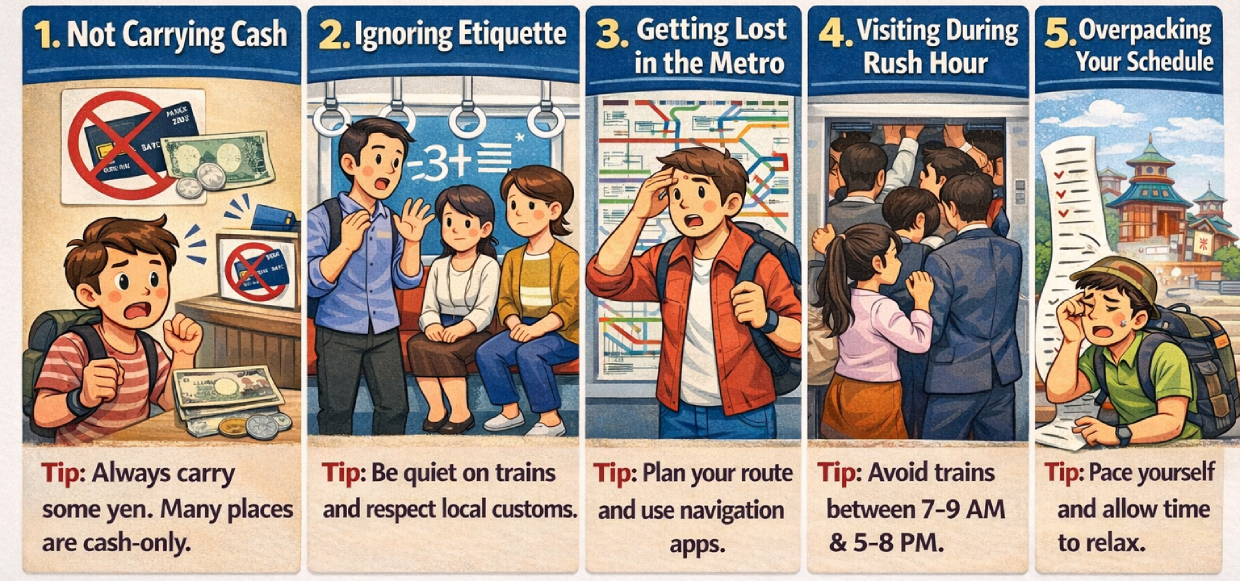
It is true that in 2026, Japan is more “cashless” than ever. However, you need to remember that it is not a card-only society. Major department stores and high-end hotels or restaurants accept cards, but you will face problems if you go cashless, especially when exploring small stalls and traditional shops in Tokyo.
The mistake: It is undeniable that Japan is a high-tech society. However, it is also wrong to assume that it must be digital-first. Travellers often arrive in Tokyo with Apple Pay and credit cards, only to find that smaller places in the city accept only Yen (Japan's official currency).
The consequence: The consequence is that you may find yourself standing in a long queue, reaching the front of a small iconic ramen shop you have been dreaming of having food from, only to find that they accept nothing but cash. Now you are stuck without food and without a way to pay for it.
What to do: The solution is easy. The first thing you need to do is keep “emergency Yen” on hand. Keep a substantial amount of cash with you at all times. There are many debit cards that work properly. However, check with your bank first before your trip to Tokyo.
If you can, use local digital IC Cards, especially for trains. You can also use it to pay at almost every vending machine, convenience store, and many casual restaurants.
#3: Not following transport etiquette
It is no secret that Tokyo has one of the cleanest, most efficient, and, not to forget, punctual subway and train systems in the world. However, there are some unwritten rules that you should break.
The mistake: As a first-time traveller to Tokyo, one of the worst mistakes you can make is failing to learn proper etiquette when using local transportation.
The consequence: Many tourists unknowingly break unwritten rules. However, it can lead to dirty looks, awkward moments, or even minor confrontations. Make sure to remember that you shouldn’t speak loudly while on the subway or train, eat or drink (except water), block doors or stand on the wrong side.
What to do: The best way is to Google to educate yourself before you visit the place. Experts at VJS Travel suggest that learning about the country's culture can help you avoid unnecessary drama. Respecting these small rules not only makes your journey smoother but also earns quiet appreciation from locals.
It is suggested that you keep your voice low, give up priority seats to elderly or pregnant passengers, silence your phone on the train, and stand on the correct side of escalators - which is the left side in Tokyo.
#4: Lack of garbage cans
Is Japan one of the cleanest countries in the world? Yes. Are there trash cans everywhere in Japan, including Tokyo? No. As surprising as it may sound, you can walk for miles in the country without seeing a single public trash can.
The mistake: Do not buy a snack or a drink, thinking you will have it on the go and dump the trash at a nearby garbage bin; there may not be one.
The consequence: Littering or "improper disposal" is deeply frowned upon in Japan. In Japan, the culture is more towards the "carry-in, carry-out" philosophy. If you find yourself in such a situation, do not leave it on top of vending machines or other places - it is a major sign of disrespect and can also land you in trouble with the authorities.
What to do: Always carry a small bag to store your trash, then dispose of it later at the accommodation's garbage bin. You can also find small trash bins in convenience stores. However, dispose of only those items that you bought at the store.
#5: Book before you visit
In many cities around the world, you can stumble upon a great restaurant or walk into a museum on a whim. In Tokyo, spontaneity is often met with a "Fully Booked" sign.
The mistake: Many wait until they visit Tokyo to book tickets for iconic places or reservations at must-visit restaurants. Remember, even the "themed" cafes often require reservations weeks in advance.
The consequence: You spend your vacation time standing in line or visiting a mediocre place instead of having a truly unforgettable experience.
What to do: Most major attractions open their booking windows exactly 30 days in advance at midnight Japan time. Set an alarm and book your ticket.
VJS Travel experts suggest you use concierge services; many reputable hotels offer them. It can help you get direct table access at many high-end Japanese restaurants and places.
Tokyo doesn't ask you to be perfect, but it does ask you to be aware. By slowing down your pace, carrying a bit of cash, respecting the silence of the trains, planning your "must-sees" in advance, and managing your own waste, you transition from being a "tourist" to being a "traveler."
Leave a Reply
Your email address will not be published.
Subscribe to receive flight deals, special offers, and travel updates directly in your inbox.